
Continuous glucose monitoring (CGM) was developed as a medical tool for people managing insulin-dependent diabetes, replacing the discomfort and data gaps of finger-prick testing with a continuous, real-time picture of interstitial glucose levels. What has shifted considerably over the past decade is the evidence base - and the conversation - around CGM use in people without diabetes. As rates of insulin resistance, pre-diabetes and metabolic syndrome continue to climb across the UK and globally, the question for nutrition practitioners is no longer whether CGM has a role beyond diabetes management, but how to use it preventatively, interpret it accurately, and deploy it responsibly where it genuinely adds clinical value. This short article examines that evidence, outlines a framework for data interpretation, and considers when CGM use may not be appropriate.
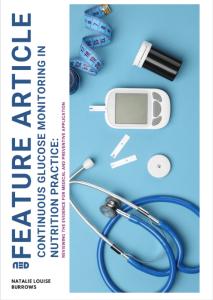
This NED Article is derived from the following journal issue.
Genetics in personalised nutrition practice, CGMs in preventative health and the power of wearable devices
Published May 2026

© Copyright 2026, Nutrition Evidence
NED wishes to thank the following organisations for their support:







We use cookies to improve your experience and analyze site traffic with Google Analytics. By continuing to use our site, you agree to our use of cookies. Learn more.